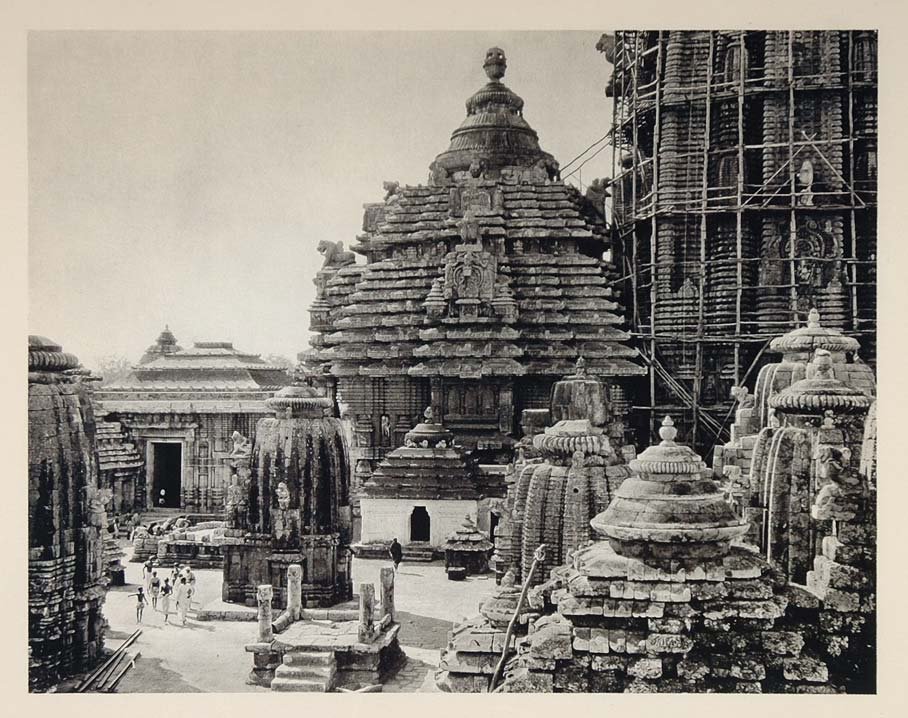
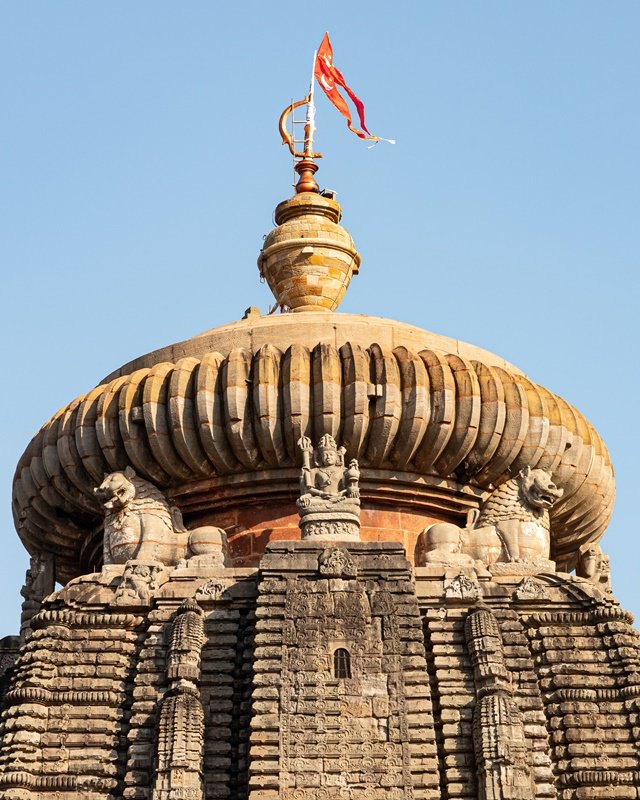
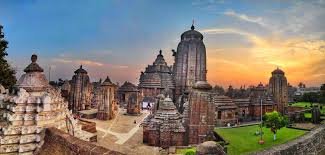

Lingaraj Temple was built in the 11th century by the Somavamsi dynasty and later completed by the Ganga rulers. Located in Bhubaneswar, Odisha, the temple is one of the oldest and most prominent shrines dedicated to Lord Shiva. It reflects the religious harmony of Shaivism and Vaishnavism, as the deity is worshipped as Harihara — a combined form of Lord Shiva and Lord Vishnu.
For centuries, the temple has remained a center of devotion, culture, and spiritual learning, attracting pilgrims from across India.
Lingaraj Temple is a magnificent example of Kalinga architectural style. The temple complex includes four main structures:
Vimana (Sanctum Tower)
Jagamohana (Assembly Hall)
Natamandira (Festival Hall)
Bhogamandapa (Offering Hall)
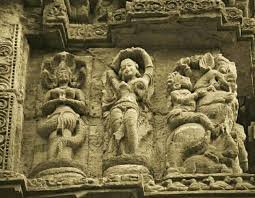
The 180-foot tall tower is richly decorated with intricate carvings of gods, goddesses, and mythological figures. The temple’s detailed stone work reflects the excellence of ancient Odishan craftsmanship.
Temple Address : Lingaraj Temple Road, Old Town, Bhubaneswar, Odisha 751002, India.
Contact No.:9078******
Email : alivapriyadarshini570@gmail.com
Copyright @ 2026 alivadev.com | Powered by Aliva